
One of our members recently sent us a link to The Secret Life of Your Body Clock, about the importance of letting your body follow its own natural sleep – wake cycle. The Secret Life of Your Body Clock This video makes several important points. Your biological clock dictates psychological behavior. It determines when your… read more
Calorie Restriction the CR Way News
Expert teleconference on Calorie Restriction, Exercise, and Longevity

Many people are signing up to be CR Way members so they can take advantage of the teleconference series, which features health and longevity experts. Tonight’s Guest is Dr. Pankaj Kapahi, professor at the Buck Institute for Research on Aging. It will be held at 7:30 (ET). Dr. Kapahi has had a significant influence on… read more
Calorie Restriction more effective with science from other fields

Does it bother you that the Internet seems like a world of fiefdoms? You go to one website to find out something about exercise. Another one has special tips on weight loss. Still another site may have valuable insights about diabetes. And the list goes on and on – sometimes with conflicting information. LivingTheCRWay.com has… read more
Making Weight Loss with Calorie Restriction Easy
Many turn to calorie restriction for weight loss, so we thought it important to remind everyone how the CR Way to Healthful Weight Loss differs from other diets. Consider an email from Greg, one of our successful members: Calorie Restriction Weight Loss Avoids High Metabolic Rate, which Equals Death Greg shared a story about a… read more
Monkey study – A decade of calorie restriction research erased?
More than a decade ago, we launched the first study of long-term serious calorie-restricted humans. That research was picked up by Washington University in Saint Louis School of Medicine, and human calorie restriction research was off and running. Building on animal studies, clinical responses to human calorie restriction were established: Calorie restriction lowers fasting glucose… read more
Calorie restriction doesn’t prolong life in rhesus monkey study
Update: New Monkey Study Confirms Calorie Restriction Extends Life! Do you believe the headlines: Calorie Restriction doesn’t prolong life? Humans and monkeys are primates. They have many similar physiological traits. So using monkeys for longevity studies that suggest possibilities for humans is not surprising. The NIA study, recently published in Nature1, reports the unexpected result… read more
Telomere Length and Calorie Restriction Effect in Cancer Prevention
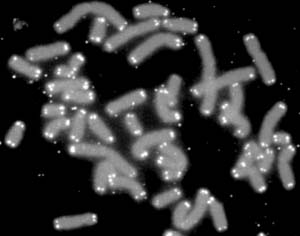
Recently, The U.S. Preventive Services Task Force, government advisory panel, advised against regular PSA tests. Their take on it: Screening for Prostate Cancer# Clinical Summary of U.S. Preventive Services Task Force Recommendation Population Adult males Recommendation Do not use prostate-specific antigen (PSA)-based screening for prostate cancer. Grade: D Screening Tests Contemporary recommendations for prostate cancer… read more
Scientists answer your questions at next CR Way teleconference

Sixteen years ago, two visionary scientists, Drs. Stephen Spindler and Joseph Dhahbi began publishing the results of a quest to help people live longer. Focusing on calorie restriction, the only scientifically proven way to extend lifespan, Drs. Spindler and Dhahbi decided to concentrate on identifying cellular regulators that control calorie restriction’s beneficial effects. They looked… read more
Summer Celebration, July 15

JOIN PAUL & MEREDITH FOR A “PURE” SUMMER CELEBRATION AT THE CR WAY LONGEVITY CENTER MID-WESTCHESTER SUNDAY, JULY 15, 2:00 TO 6:00 PM 45 minutes from Grand Central – by car or by train, 10 minutes by taxi from the Croton-Harmon train station to the Center. We are enjoying our new Pure Water… read more
Calorie Restriction the CR Way is a stem cell diet

The concept of how we age is changing. It is now known that every organ has its own pool of stem cells. Like an old car, that “runs out of gas” permanently, our organs run out of stem cells, fall into disrepair, and eventually die. However, there is hope – for unlike a car, we… read more